- Cool and dry
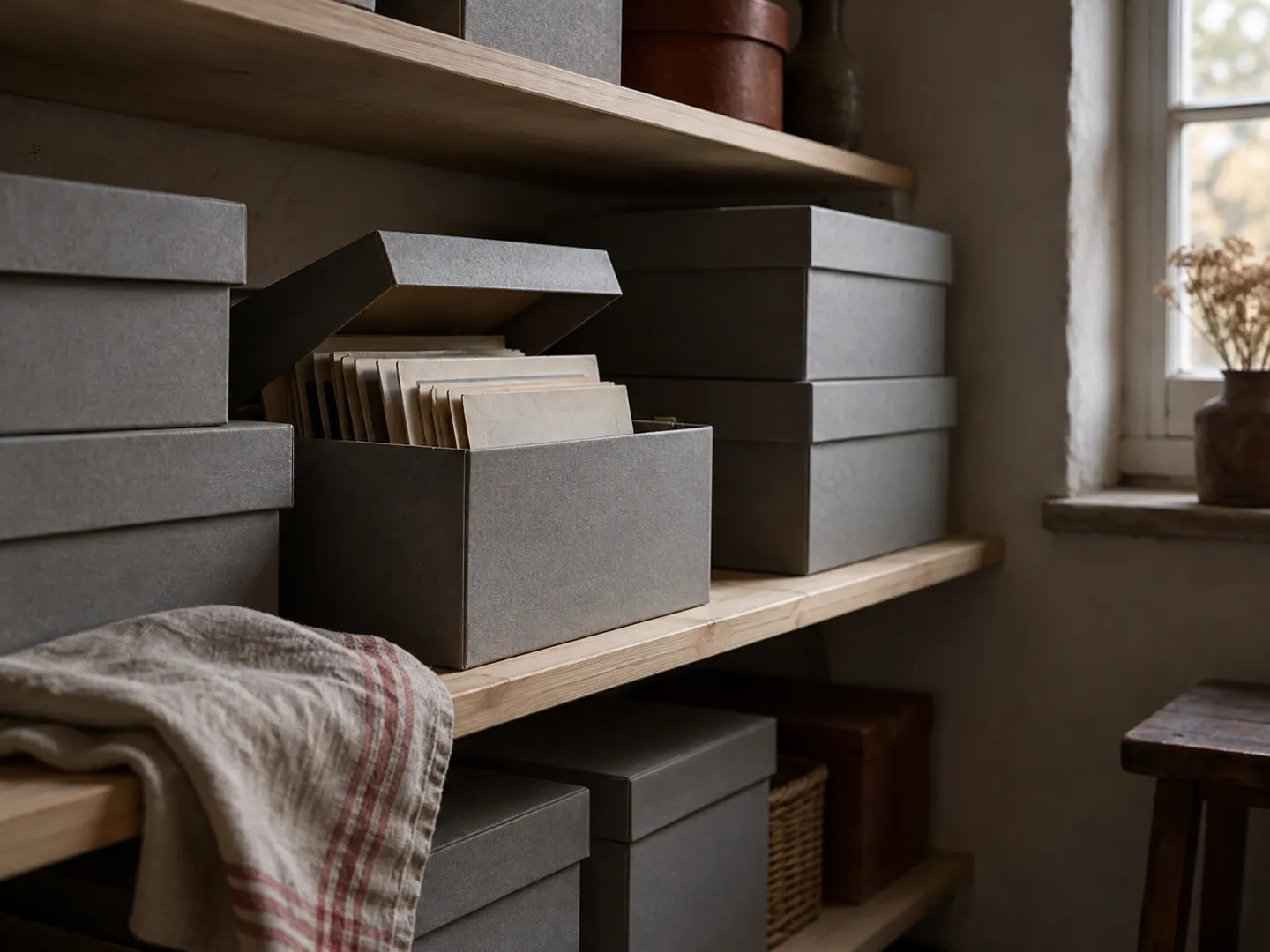
- Out of the light
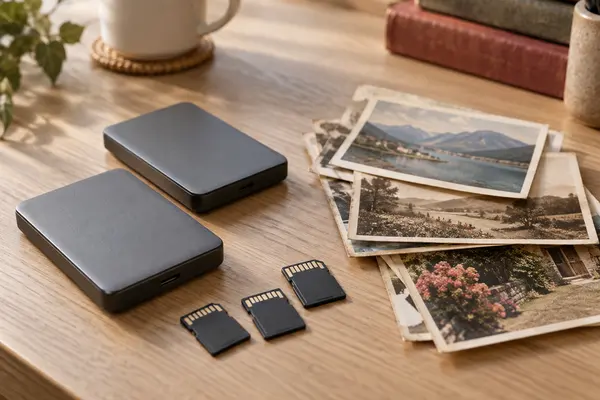
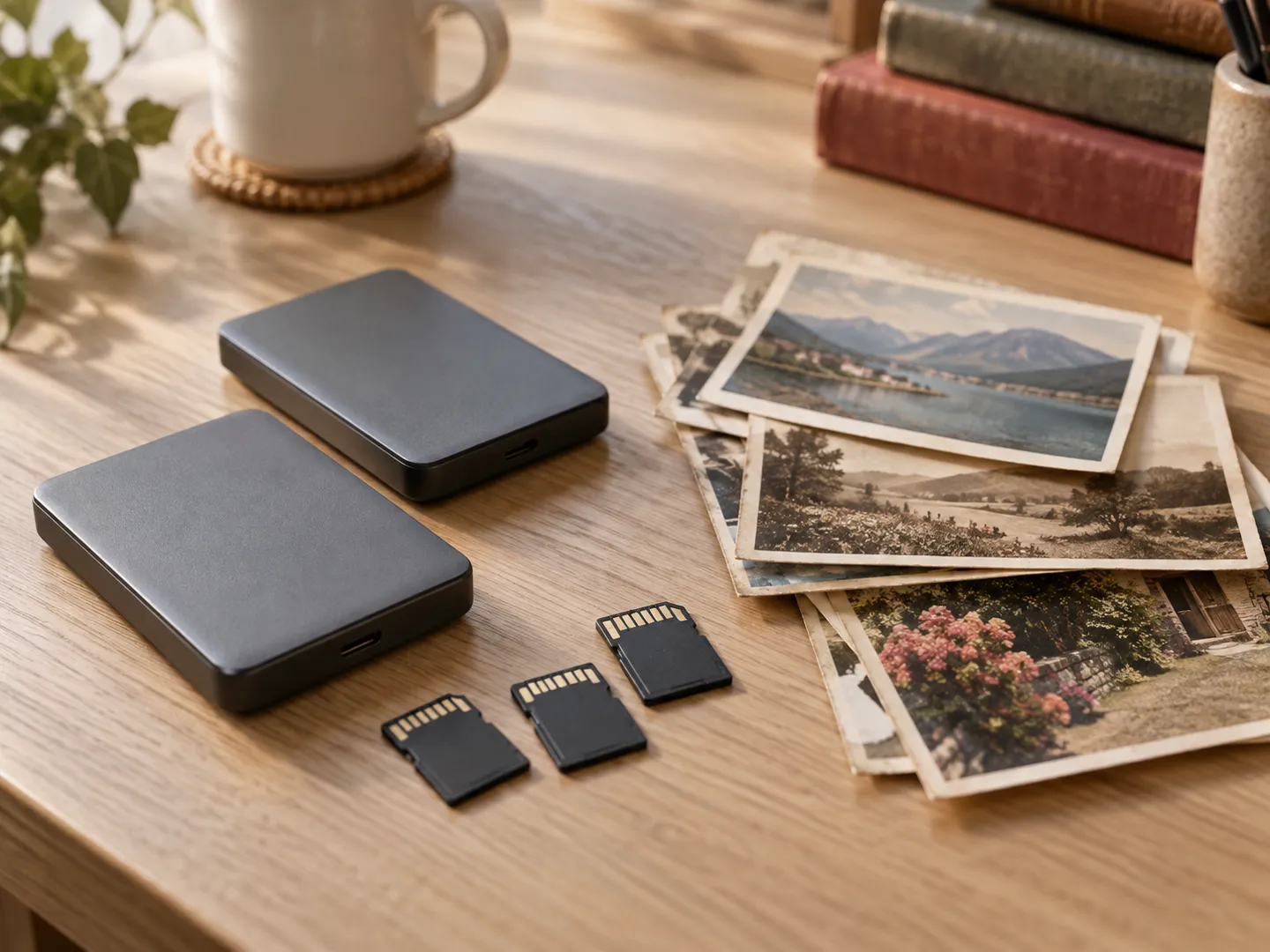
- Two copies, kept apart
- Look after the originals
PRINTS AND NEGATIVES
Cool, dry and dark
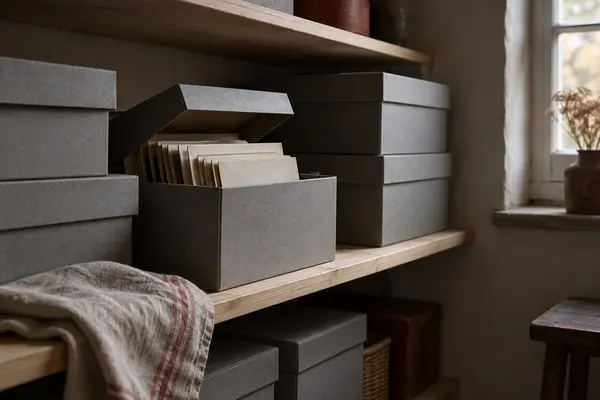
Keep them at 21°C or below and 30 to 50% humidity, in a lidded box, away from lofts, cellars and sunlight.
See the numbers doodlephotograph
Updated
WHAT THE ARCHIVES ADVISE
The oldest camera photograph known to survive is nearly 200 years old. Yours can last too.
Heat, damp, light and the wrong album wear prints out slowly. Digital photos vanish faster, when the only copy goes. Here is what libraries and conservators advise for both, in plain English.
Plain English, with the sources linked.
COOL · DRY and dark
Check where yours are kept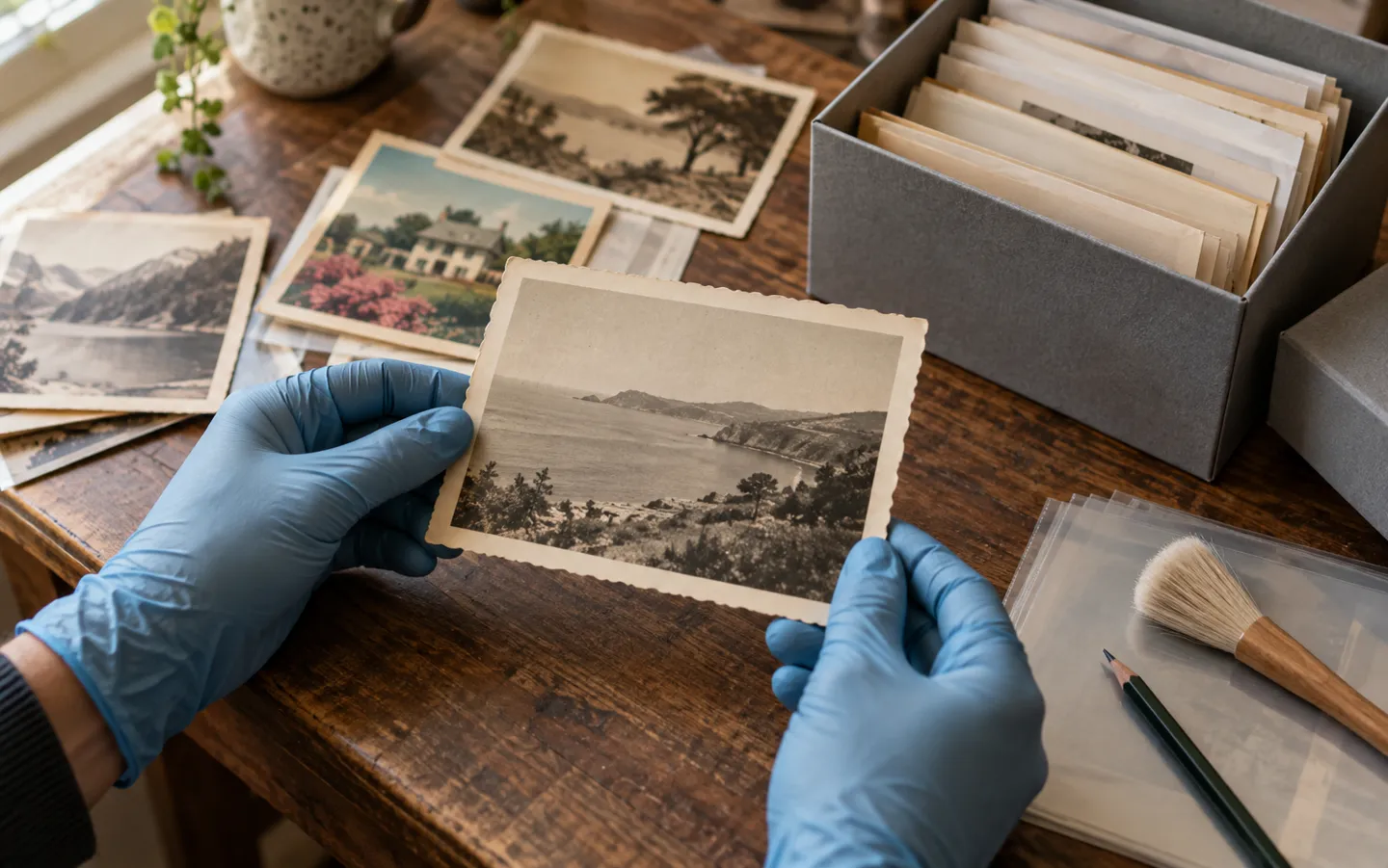
THE SHORT ANSWER
Prints need a stable home.
Digital files need more than one.
PRINTS AND NEGATIVES
Keep them at 21°C or below and 30 to 50% humidity, in a lidded box, away from lofts, cellars and sunlight.
See the numbersDIGITAL FILES
Keep at least two copies on different media, check once a year that they open, and recopy every five years.
Set it upHANDLING
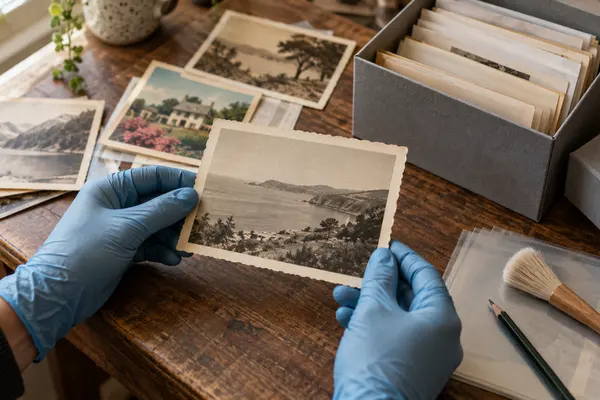
Hold prints by the edges with clean hands or nitrile gloves, and label the back edge in pencil, not pen.
Check your storageA QUICK STORAGE CHECK
Pick the place closest to where your family prints live now. The ratings follow guidance from the Library of Congress and the Northeast Document Conservation Center.
This is a rough guide, not a survey of your home. A damp cupboard or a hot room can be as bad as a loft.
TWO SURVIVORS WORTH KNOWING
The earliest photographs still exist
because someone kept them well.
Several days of sun
A view from a window, on pewter
Nicéphore Niépce spread light-sensitive bitumen on a polished pewter plate and left it in a camera near a window. The Harry Ransom Center calls it the earliest camera photograph known to survive.
NIÉPCE · 1827
35 × 29 mm
A window at Lacock Abbey, on paper
William Henry Fox Talbot's tiny paper negative of a window, taken in August 1835, is held by the Science Museum Group as the earliest known surviving photographic negative.
TALBOT · 1835
Both survived nearly two centuries in collections that control light, heat and handling. The same basics work at home on a smaller scale.
THIS WEEKEND
Lofts get too hot and cellars too damp. Move the boxes into a cool, dry, dark cupboard in the lived-in part of the home.
Skip self-stick albums for anything you re-house. Use corner mounts and acid-free paper, a lidded acid-free box, or polyester or polypropylene sleeves.
Write names and dates lightly along the edge of the back with a soft pencil. Frame a good copy and keep the original in the dark.
Pick the photos that matter, give them clear file names, and keep at least two copies on different media in different places.
THE NUMBERS
The Library of Congress recommends storing photographs at 70°F (about 21°C) or cooler. For colour photographs and film negatives it recommends 40°F (about 4°C) or below.
Relative humidity should sit between 30 and 50%, and ideally change by less than 5% within a 24-hour period, according to the same guidance.
At high humidity, especially above 70% relative humidity, photographic emulsions can stick to plastic enclosures. That is one reason cellars are a poor choice.
Uncoated polyester, polyethylene and polypropylene are suitable sleeve materials. PVC is very unstable and should always be avoided. Look for enclosures that pass the Photographic Activity Test.
For digital photos, the Library of Congress suggests checking at least once a year that your files still open, and making new media copies every five years.
QUICK QUESTIONS
Short answers to the questions people ask most.
What temperature and humidity are best for old photographs?
The Library of Congress recommends storing photographs at 21°C (70°F) or below and at 30 to 50% relative humidity, ideally changing by less than 5% within 24 hours. Colour photographs and film negatives last longer at about 4°C (40°F) or below.
Should I wear gloves to handle photographs?
The Library of Congress says to handle photographs with clean hands or while wearing clean nitrile gloves, and to consider gloves for negatives and for glass, metal and plastic items. Hold prints by the edges.
Are old self-stick photo albums bad for photos?
They can be. The Northeast Document Conservation Center notes that self-stick album pages are often highly acidic and can permanently bond to photographs. It suggests corner mounts and acid-free paper instead.
How many copies of my digital photos should I keep?
The Library of Congress advises at least two copies, more if you can, on different media and stored in places as far apart as practical. Check once a year that the files still open, and make new copies every five years.
What is the oldest surviving photograph?
The Harry Ransom Center in Texas holds a heliograph by Nicéphore Niépce made in 1827, which it describes as the earliest photograph made with a camera obscura known to survive. It needed several days of sunlight to form.
A NAME WORTH KEEPING
doodlephotograph.com is part of the DoodleSale portfolio. It isn't in an auction right now, but you can ask about leasing it.